Saturday, August 25, 2018

CARLOS BARRIA / REUTERS
Michael Gerson, one of the most eloquent and principled critics of Donald Trump, insists that we are at June 1973, the moment when John Dean’s testimony broke the dam that a year later swept Richard Nixon off into disgrace. Others agree: This is an inflection point. And yet an equally well-informed friend insists, “I no longer believe in political inflection points and neither should you.” Who knows? But even if we do not recognize the turning points in the moment, we can anticipate what the end will feel like when it does arrive.
To be sure, Trump could hang on until the 2020 election. It is even possible, if considerably less likely, that he could be reelected and march off into a glitzy retirement at Trump properties in Florida and New Jersey, his retreat from public life punctuated only by bursts of increasingly senile bombast. But it does seem more likely than it once was that he will go down in disgrace.
The mood of that moment was given to us in an episode now faded into the remote, pre-Paul Manafort-conviction, pre-Michael Cohen-guilty-plea world, when Omarosa Manigault-Newman, the flashy villainess of more than one Trump reality-television show, turned on her benefactor with juicy and not entirely incredible revelations. A puerile justice this: the secret taper of others taped, the once upright Marine general caught trying to bully the only black woman close to the president by locking her in the Situation Room while threatening her with legal consequences to force her resignation. Her betrayal of her benefactor proved a tawdry but revealing final episode in this particular show.
But to really get the feel for the Trump administration’s end, we must turn to the finest political psychologist of them all, William Shakespeare. The text is in the final act of what superstitious actors only refer to as the “Scottish play.” One of the nobles who has turned on their murderous usurper king describes Macbeth’s predicament:
Those he commands move only in command,
Nothing in love. Now does he feel his title
Hang loose about him, like a giant’s robe
Upon a dwarfish thief.
And so it will be for Trump. To be clear, these are very different people. Macbeth is an utterly absorbing, troubling, tragic, and compelling figure. Unlike America’s germaphobic president, who copped five draft deferments and has yet to visit the thousands of American soldiers on the front lines in Afghanistan or Iraq, he is physically brave. In fact, the first thing we hear about him is that in the heat of battle with a rebel against King Duncan (whom he later murders) Macbeth “unseamed him from the nave to th’ chops.” He is apparently faithful to his wife, has a conscience (that he overcomes), knows guilt and remorse, and has self-knowledge. He also has a pretty good command of the English language. In all these respects he is as unlike Trump as one can be.
But in the moment of losing power, the two will be alike. A tyrant is unloved, and although the laws and institutions of the United States have proven a brake on Trump, his spirit remains tyrannical—that is, utterly self-absorbed and self-concerned, indifferent to the suffering of others, knowing no moral restraint. He expects fealty and gives none. Such people can exert power for a long time, by playing on the fear and cupidity, the gullibility and the hatreds of those around them. Ideological fervor can substitute for personal affection and attachment for a time, and so too can blind terror and sheer stupidity, but in the end, these fall away as well.
And thus their courtiers abandon even monumental tyrants like Mussolini—who at least had his mistress, Claretta Petacci, with him at his ignominious end. (Melania’s affections are considerably less certain.) The normal course of events is sudden, epic desertion, in which an all-powerful political figure who loomed over everything is suddenly left shrunken and pitiful, a wretched little figure in gaudy robes absurdly too big for him, a figure of ridicule as much as, and even more than, hatred.
This is going to happen to Trump at some point. Of the Republicans in Congress it may be said of most of them: Those he commands move only in command, nothing in love. For now, admittedly, there are those who still court his favor—Senator Lindsey Graham, for example, once the trusty vassal of Senator John McCain, the bravest of warriors and noblest of dukes, seems to have switched his allegiance from his dying lord to the swaggering upstart aged prince. But that is about ambition, not affection.
For the moment, the Republicans will not turn on Trump. They fear a peasant revolt, many of them; they still crave favors; they may think his castle impregnable, although less so if they believe what the polls tell them about some of its tottering walls. But if they suffer a medieval-style slaughter on Election Day, the remnants of the knights of the GOP will know a greater fear than that of being primaried. And at the moment when they no longer fear being swept away in 2020, when the economy may be in recession and Robert Mueller’s probe is complete with revelations whose ghastliness would delight the three witches of the Scottish play, they will suddenly turn on Trump. Act V of this play will also have a nonlinear finish.
And what of Trump himself? In this respect he will be like Macbeth. Where Nixon, who was a statesman, saw the inevitable and resigned, this president is more likely to go down spitting defiance. As for the rest of us, Macduff says to the cornered king just before their final death grapple:
Live to be the show and gaze o’ th’ time.
We’ll have thee, as our rarer monsters are,
Painted upon a pole, and underwrit
“Here may you see the tyrant”
And so it will likely be, as Americans gaze back and wonder how on earth this rare monster, now deposed, ended up as their president.
We want to hear what you think about this article. Submit a letter to the editor or write to letters@theatlantic.com.


VIDEOS

Exclusive: Ex-Trump World Tower doorman releases 'catch-and-kill' contract about alleged Trump affair - CNN

Exclusive: Ex-Trump World Tower doorman releases 'catch-and-kill' contract about alleged Trump affair
CNN Expansion NYC 2017 PH: JOHN NOWAK  Sonia Moghe
By Sonia Moghe, CNN

Updated 1017 GMT (1817 HKT) August 25, 2018
CNN obtains copy of ex-doorman's agreement

Trump: Impeach somebody who's done great job?

Trump on Manafort: I feel sad about that
President Donald Trump signs the John McCain National Defense Authorization Act for the Fiscal Year 2019, during a signing ceremony Monday, Aug. 13, 2018, in Fort Drum, N.Y. (AP/Hans Pennink)

(CNN)A former Trump World Tower doorman who says he has knowledge of an alleged affair President Donald Trump had with an ex-housekeeper, which resulted in a child, is now able to talk about a contract he entered with American Media Inc. that had prohibited him from discussing the matter with anyone, according to his attorney.

On Friday, Marc Held -- the attorney for Dino Sajudin, the former doorman -- said his client had been released from his contract with AMI, the parent company of the National Enquirer, "recently" after back-and-forth discussions with AMI.
CNN has exclusively obtained a copy of the "source agreement" between Sajudin and AMI, which is owned by David Pecker.
Why the Allen Weisselberg immunity deal may be the biggest news of this bananas week
The contract appears to have been signed on Nov. 15, 2015, and states that AMI has exclusive rights to Sajudin's story but does not mention the details of the story itself beyond saying, "Source shall provide AMI with information regarding Donald Trump's illegitimate child..."
The contract states that "AMI will not owe Source any compensation if AMI does not publish the Exclusive..." and the top of the agreement shows that Sajudin could receive a sum of $30,000 "payable upon publication as set forth below."
But the third page of the agreement shows that about a month later, the parties signed an amendment that states that Sajudin would be paid $30,000 within five days of receiving the amendment. It says the "exclusivity period" laid out in the agreement "is extended in perpetuity and shall not expire."
The amendment also establishes a $1 million payment that Sajudin would be responsible for making to AMI "in the event Source breaches this provision."
Trump's hideous legal landscape just got even worse
"Mr. Sajudin has been unable to discuss the circumstances regarding his deal with American Media Inc. and the story that he sold to them, due to a significant financial penalty," Held told CNN. "Just recently, AMI released Mr. Sajudin from the terms of his agreement and he is now able to speak about his personal experience with them, as well as his story, which is now known to be one of the 'catch and kill' pieces. Mr. Sajudin hopes the truth will come out in the very near future."
In April, Sajudin told CNN he claims to have knowledge of a relationship Trump had with his former housekeeper that resulted in a child.
At the time, AMI called Sajudin's story "not credible" and denied any connection between the story and Trump and his then-personal attorney Michael Cohen.
The White House did not respond to CNN's requests for comments in April.
CNN has contacted AMI to clarify whether Sajudin has now been released from the contract to be able to speak on terms of the agreement and to seek reaction on this latest development, but has yet to receive a response.
Former staffer: Pecker could turn on Trump

Sajudin's allegation that Trump fathered a child out of wedlock has not been independently confirmed by any of the outlets that have investigated the story.
Held said he cannot give the exact date the agreement was terminated, per another agreement the attorney made with AMI in order to get his client out of the contract.
Held said that now that Sajudin has been released from the agreement with AMI, he would no longer be liable for a payment for speaking out.
"He's a blue-collar worker and a million dollars would have ruined him for life," Held told CNN.
What the doorman claims to know
When the story surfaced in April, Sajudin told CNN about the alleged relationship in a statement:
"Today I awoke to learn that a confidential agreement that I had with AMI (The National Enquirer) with regard to a story about President Trump was leaked to the press. I can confirm that while working at Trump World Tower I was instructed not to criticize President Trump's former housekeeper due to a prior relationship she had with President Trump, which produced a child."
The Associated Press reported in April that Cohen "acknowledged to the AP that he had discussed Sajudin's story with the magazine when the tabloid was working on it. He said he was acting as a Trump spokesman when he did so and denied knowing anything beforehand about the Enquirer payment to the ex-doorman."
Cohen pleaded guilty Tuesday to charges of tax fraud, false statements to a bank and campaign finance violations tied to his work for Trump.
In that deal, he pleaded guilty to paying $130,000 to former adult film star Stormy Daniels, whose real name is Stephanie Clifford, to conceal her story of an alleged affair with Trump. He also pleaded guilty to working with AMI to pay off former Playboy model Karen McDougal in a similar "catch and kill" agreement in order to keep her allegations of an affair with Trump from being published. Trump has denied an affair with both women.
Pecker has received immunity in the Cohen case for providing details of the payments to prosecutors, a source confirmed to CNN on Friday.

'After 37 years I caught my brother's killer on Facebook' - BBC News

'After 37 years I caught my brother's killer on Facebook'
24 August 2018

Chris Farmer and Peta Frampton, shortly before setting off on the adventure that would end their lives
Nearly 40 years after the tortured corpses of a young British couple were discovered in Caribbean waters, and the trail for the killer went cold, a breakthrough came from an unlikely source on the other side of the world, writes Ben Dirs.

You can find anything on the internet. An old schoolmate, a long-lost cousin, an ex-girlfriend. A dog that ran away.

If they're not on there, someone will be who knows how to find them. In the age of social media, there is no escape.

On the afternoon of 2 October 2015, Penny Farmer returned from a walk in the Oxfordshire countryside, flipped open her laptop, fired up Facebook and typed in the name of the man she suspected of murdering her brother, back when the world was a bigger place.

And there he was. Grey beard. Baseball cap. Sunglasses. Denim shirt. Looking, Penny thought, just like a serial killer.

"Heaven knows why I didn't look earlier," says Penny, a cheerfully frank woman who tells her story without indulging in self-pity.

"I suppose I thought he was lost to us. He just seemed so remote and hidden. But thank God I did."

In July 1978, the bodies of Penny's brother Chris and his girlfriend Peta Frampton were found floating off the coast of Guatemala. They had been tortured, bound and weighed down with engine parts. The doctor who carried out the autopsy stated that "the aspects of [both corpses] were monstrous".

In Manchester, Penny's parents awaited Chris' next letter. Chris, a 25-year-old doctor, and Peta, a 24-year-old lawyer, were childhood sweethearts on an exotic adventure. Both wrote regularly, but in that pre-digital age, especially in Central America, communication was haphazard. Lapses were to be expected.

But when days turned into weeks, turned into months, the families of both Chris and Peta began to fret. Government authorities and police were notified, searches were carried out, appeals were made, sightings were reported.

Peta's letters to her parents had revealed that she and Chris had met an American and his two young sons in Belize, shelved their original plan to catch a bus to Mexico and decided to sail on the American's small fishing boat to Honduras instead. In the last letter she sent, Peta signed off with: "Nothing much happens on a boat."

Penny's father contacted the harbour master in Belize, who revealed that the Justin B had set sail with Chris and Peta on board but returned without them.

Stories you may also be interested in:
The 40-year hunt for a killer
How I caught the ‘black widow’ who killed my brother
I made police catch my best friend’s killer - 25 years later
The American, one Silas Boston, was traced to Sacramento, California, and questioned by the British Consulate General. Though convinced of Boston's involvement in Chris and Peta's disappearance, they could garner no proof.

Remarkably, Greater Manchester Police allowed Penny's father to telephone Boston. Boston was arrogant and evasive and denied knowing anything.

On 1 February, the Farmer family received the call they had been dreading. When Penny walked into the front room, having been called home by her weeping mother, the first thing she saw was Chris' graduation photograph.

"The thought flickered through my head - there will be no more photographs."

Soon, the case was cold. There had been no crime scene investigation, no story in the Guatemalan newspapers, no assistance from the Guatemalan police.

Boston's story was full of holes, he had a rap sheet that included assault, carrying a concealed firearm and rape, and the third of his seven wives had disappeared 10 years earlier. But the Sacramento Police Department could make no headway.

Most remarkable of all, Boston's two sons were never interviewed and there was no suggestion that anyone had tried to trace them.

"It's difficult to imagine just how difficult it was back then, with no computers or mobile phones," says Penny.

"Guatemala was a third-world country, and there wasn't really a Guatemalan police force. There was no communication with Britain, because they laid claim to Belize, which was a British territory.

"The American police weren't very helpful. The Greater Manchester Police handed the case back to my dad. And something happened in the 1980s, which we don't know the full extent of, that made the case fall off a cliff completely.

"I could see the effect it had on my parents, but they didn't buckle. My mum took one day off work, not because she didn't love Chris, but because she thought she couldn't give into it. There was no counselling or medication, Mum and Dad just knew they had to cope. I find that really admirable."

Image copyrightCOURTESY PENNY FARMER
Image caption
Penny Farmer found her brother's murderer decades later
Penny, who was 17 when her brother was murdered, went off to university, became a journalist, got married and had three children. She found happiness again, as, she thinks, did her parents. But they remained plagued by questions.

"You develop ways of coping with it but scratch the surface and not far beneath remains huge hurt. I know my parents were haunted by the thought, 'Why did they end up as they did?'

"A lot of people have sadness in their lives, but Chris and Peta's deaths were particularly tragic. They were so innocent, lambs to the slaughter, and they would have had fulfilling, worthwhile lives."

With the advent of the internet, Penny's father attempted to breathe new life into the case. His email to the Sacramento Police Department is heart-breaking in its lack of bitterness or rancour.

He received no reply.

Penny's father died in 2013, knowing that something terrible happened to his son, but neither how or why.

Chris, Russell (with fish) and Vince on the Justin B. This photo only emerged in 2016 when Russell salvaged it from his father's things
That might have been that, had Penny not had her lightbulb moment, out with her mum in the Oxfordshire countryside.

Not only did Penny find Silas Boston on Facebook, she found his two sons, Russell and Vince, as well as his fifth wife. She messaged them all but got no immediate reply.

Undeterred, Penny contacted Greater Manchester Police, which contacted the Sacramento Police Department, which, it just so happened, had just reopened the case into the disappearance of Boston's third wife. Renewed hope, at last.

Astonishingly, Boston's sons had told the police that it was an open family secret that their father had killed their mother.

Even more astonishingly, they had spent the best part of three decades trying to convince the police that they had witnessed their father murdering Chris Farmer and Peta Frampton in Guatemala.

The Sacramento Police Department, the Royal Canadian Mounted Police, the FBI, Interpol, Scotland Yard, the Serious Organised Crime Agency (which in 2013 was replaced by the UK's National Crime Agency) - all are believed to have been informed. None of them acted. Meanwhile, Boston, his body failing after a debauched life on the run, had returned home to California.

In March 2016, six months after her initial Facebook enquiries, Penny, her mother and her older brother Nigel gathered at Greater Manchester Police offices in Ashton-under-Lyne. Officers had brought along witness statements from Boston's two sons. Penny's mother wanted them to spare no detail.

"It's quite incredible how much I know about what happened that day," says Penny.

"Boston was a rapist. My brother was in a very bad way, tied-up on the top deck. Peta was down in the cabin. I don't really need to say any more. I hope people can join the dots without me being too graphic.

"The really heart-warming thing was that even though Chris had a fractured skull and other broken bones, and there was blood all over the deck, he was still trying to comfort Peta, telling her it was all going to be alright. Even when they were trussed-up like turkeys, waiting to be thrown overboard."

Penny with Russell Boston
Russell also claimed his father murdered two more tourists, possibly from Scandinavia, only a fortnight later. Penny discovered that attempts had been made by the FBI to trace them at the time, to no avail again.

Boston was eventually tracked down to a nursing home in Eureka, California. A couple of years earlier, having complained of having no friends, a carer set up a Facebook page for him. The carer could be forgiven for thinking, 'Who would be looking for this sad old man anyway?' Boston thought the same.

Thinking Boston might be the so-called Golden State Killer, who terrorised California in the 1970s and 80s, police took a swab. A DNA test came back negative. (Joseph DeAngelo, the man police think is the Golden State Killer, was arrested in April and is accused of 13 murders and dozens of rapes).

However, the FBI had tracked down various witnesses from Belize and Guatemala, including one of the ambulancemen who had retrieved Chris and Peta's bodies from the sea and who was now living in New York. They had also traced the doctor who wrote the autopsy, who was now in his 90s, as well as the harbour master from Belize, who had corresponded with Penny's father.

Penny also visited Boston's son Russell in America. When the woman sitting next to her on the plane asked what she planned to do in California, Penny replied, "I'm going to meet the guy who saw my brother murdered".

Penny was surprised by how normal Russell seemed, despite having lived his entire life in fear of a psychopathic father.

Boston had confided in Russell that he had killed 33 people. If true, that would make Boston one of the most prolific serial killers in American history. He even threatened to kill Russell and his brother, immediately after killing Chris and Peta, to keep his secret safe.

Russell described life on the boat, which sounded almost idyllic. They sailed the Caribbean Sea for hours in glorious sunshine, fishing over the side. Even Russell's father loved listening to Chris's music on his beloved 'boombox'. Supertramp's Crime of the Century was a favourite.

Russell described how Chris had defended him from his father and how his father had sought revenge.

And he described how his father would grow agitated, after Chris and Peta were dead, when Pink Floyd's Dogs came on: "When they turn their backs on you, you'll get the chance to put the knife in…"

Silas Boston
On 1 December 2016, 14 months after Penny had located him on Facebook and 38 years after his despicable crime off the coast of Guatemala, Boston was arrested and charged with the murders of Chris Farmer and Peta Frampton.

However, Boston had a few more tricks up his sleeve. Strapped to a hospital bed, his organs failing, he exercised his right to withdraw medical treatment.

On 24 April 2017, Penny received the news that Boston was dead.

"He took the coward's way out," says Penny. "I felt cheated. I would have relished seeing him in court and telling him how he'd devastated both our families. Bringing him down had become an all-consuming passion. But he exited on his terms. That was him sticking two fingers up at the world.

"Closure is a lovely term, and I do believe that closure only comes when the truth is known. My mother is 93 and now has all the answers to the questions that haunted her for 38 years. But just because you've found answers doesn't mean you stop hurting. I'm not quite there yet."

A statement from Greater Manchester Police said the case went cold because of a lack of evidence but was never closed.

"As with all cases, when new information came up, we started looking back into it. The Farmer family were very positive about our investigation when more evidence came to light."

Penny has written a book, Dead in the Water, about Chris and Peta's murders and her attempt to bring Boston to justice. She hopes it will stand as a lasting memorial to a beloved brother who had so much more to give.

It is also, Penny happily concedes, simply a remarkable story, almost too mad to make up, too good not to tell and which one day, no doubt, will be a film.

But Penny suspects the story is not over yet. Most of all, she would like to know why the case was closed, allowing a psychopath to roam free and kill again.

So while Penny's work on the case is at an end, she hopes others will delve deeper.

Because, as Penny well knows, the world got smaller.

Is North Korea secretly continuing its nuclear programme? - BBC News

Is North Korea secretly continuing its nuclear programme?
By Andreas Illmer
BBC News
2 July 2018

Reports that North Korea is continuing its weapons programme, despite pledges to denuclearise, have cast doubt on its sincerity in peace talks.

The recent reports, based on US intelligence leaks, suggest the country is still upgrading its nuclear enrichment sites, among other activities. So what's actually going on?

What are the allegations?
Here's what has been reported across US media:

North Korea's only official nuclear enrichment site at Yongbyon is being upgraded.
The country is stepping up enrichment at two or more secret sites besides Yongbyon.
Pyongyang continues to produce more mobile launch vehicles for its ballistic missiles.
It has also expanded missile production of solid fuel engines which are more mobile and easier to launch.
How reliable are these reports? They are "only" reports but they are deemed accurate by respected North Korea watchers.

The information is based on multiple unnamed sources from the US intelligence community as well as the 38 North study of satellite images of the Yongbyon site.

How serious are they?
"None of that activity is in violation of any agreements made at the Singapore summit between US President Donald Trump and North Korean leader Kim Jong-un," explains Vipin Narang, MIT professor for political science and specialist on nuclear proliferation.

In the declaration wrapping up that summit, Pyongyang merely agreed to work towards denuclearisation of the Korean peninsula, something it sees as a phased process.

Details of the process still remain to be worked out by the two sides.

"This was never going to be unilateral and immediate," says Mr Narang. "So Kim Jong-un is free to continue operating the existing sites."

To trust or not to trust, that is the question
Yet the reports that the North is continuing its nuclear activity is still seen as undermining the spirit of the summit and casts doubt on Pyongyang's sincerity to denuclearise.

"The bigger picture here is that North Korea's nuclear programme continues as directed by Kim Jong-un in his speech in January, where he urged the continued production of warheads and ballistic missiles," explains Ankit Panda, editor at The Diplomat magazine.

What were the results of the Trump-Kim summit?
North Korean propaganda changes its tune
N Korea still poses major threat - Trump
What is the biggest news?
Solid fuel engines are more mobile and hence a big step for Pyongyang. Together with the mobile launchers, it means that North Korea can fire missiles from sites that can be quickly set up and not be detected ahead of time by South Korea or the US.

Yet the biggest revelation has been the details about North Korea's secret enrichment sites. So far, Pyongyang has only ever admitted to one enrichment site: Yongbyon.

Image copyrightKCNA
Image caption
Solid fuel and mobile launchers would be a major step for Pyongyang
It's been a longstanding suspicion though that there are more, secret sites. An exclusive NBC report based on US intelligence sources confirmed and named one such site and says there is at least one more secret enrichment site.

"You can imagine a North Korean strategy where - without a full disclosure of all their facilities - they can offer to shut down some of the known sites in order to get sanctions relief," explains Mr Narang.

"At the same time they would clandestinely push ahead at the secret sites."

A sacred mountain and other ideologies
On board the train to Korea's music festival for peace
Inside the North Korean place that ‘doesn’t exist’
Why is timing important?
The information coming from the US intelligence sources is presumably something they have known for quite some time. Mr Trump is likely to have been briefed about that very information in the run-up to the Singapore summit.

So why is it now being leaked to the media?

"The sheer number of leaks on nuclear activity makes it look like an authorised attempt to get that intel out into the public sphere," says Andray Abrahamian of the Griffith Asia Institute.

Experts believe there are two reasons why the US intelligence community might have chosen to disclose its information at this point in time.

Scenario one would be "to counter the narrative coming from the White House that it's 'mission accomplished' and that North Korea is no longer a nuclear threat," explains Mr Narang.

It may therefore "constrain Trump a bit so he can't claim successes that have not yet be reached", agrees Mr Abrahamian. "It gets the foreign policy community riled up and increases pressure on Trump not to be soft on the [North] Koreans."

The other scenario would be that it's in fact co-ordinated by the Trump administration to generate leverage. By revealing the extent of US intel, Washington can put pressure on North Korea to admit to its secret sites and operations.

The leaked intel could be a way to say 'Mr Kim, we're watching you'
"The assumption was always that we would let the North Koreans disclose their own sites and check that against the list the US intelligence community maintains," explains Mr Panda. "Immediately you would have a sense of whether or not the North Koreans are negotiating in good faith.

"Now that we have put out what we know about the covert enrichment sites, we can see if the North Koreans will choose to disclose those or not."

Will the pressure work?
What remains is the bigger question of whether post-Singapore summit, this kind of pressure will really be able to steer Pyongyang into line.

The flurry of recent reports of North Korea's continued nuclear and military efforts suggest the country is intent on maintaining its nuclear and ballistic capabilities and even to continuing to produce them.

"It could be that Pyongyang is calculating that no matter what, China is already off the maximum pressure campaign of sanctions against North Korea. And the US really can't sustain it without China," warns Mr Narang.

"Kim Jong-un might simply say 'I've done what I have to in order to break the maximum pressure campaign' - and I think he might be right."

Hotel California by the Eagles: What was it actually about? - BBC News

Hotel California by the Eagles: What was it actually about?
22 August 2018

The band has two of the top three selling albums in history
Michael Jackson's Thriller has been overtaken as the all-time best-selling album in the US by the Eagles' greatest hits, and that band's album Hotel California is at number three. What is the spooky title track all about, asks Alan Connor.

Rock stars of the 1970s were not kind to hotels.

In Life's Been Good, sometime Eagles guitarist Joe Walsh describes the process bluntly. "I live in hotels, tear out the walls," he confesses: "I have accountants pay for it all."

"It all" being a small fortune. In the official history of the band, Walsh recalls a single night at Chicago's Astor Towers in which he and Blues Brothers star John Belushi managed a $28,000 ( £22,000) damage bill.

Among other bands, misuse of the hospitality industry was part of the legend - think of Led Zeppelin drummer John Bonham roaring down the corridors of Los Angeles' Continental Hyatt on a Harley Davidson he'd got for his birthday, or The Who's drummer Keith Moon, on his own birthday, ploughing a Lincoln Continental into the swimming pool of Flint Michigan's Holiday Inn.

But the Eagles? The laid-back, cleanly-coiffed band who urged America: "We oughta take it easy"?

Hotel California was one of the band's biggest hits
The senior Eagles, Glenn Frey and Don Henley, quietly tolerated Walsh's destruction but when it was their turn to write about what life on the road meant to them, the result was much less literal - and it made an enormous fortune rather than costing a small one.

Don Henley had been playing with the phrase "Hotel California" for some time, but to become a song, it had to go through the regimented process the band had adopted by the mid-1970s. The Eagles were not yet at the point of communicating via lawyers, but they were referring to one another by surname.

Another Eagles guitarist, Don Felder, was tasked with recording instrumental snatches onto tape and submitting them to Frey and Henley in hope of their approval. He had been doing this at home in Los Angeles' Topanga Canyon, but while on tour he took a call from his wife Susan, who had recently given birth.

Glenn Frey talks about the significance of the Hotel California lyrics.
It was a short call: "We're moving." Relaxing in their garden, she had noticed that the blanket she was lying on with the baby was next to a nest of rattlesnakes. Susan and son flew immediately to a rented beach house in Malibu; Don joined them and that evening duly began recording a suggestion for a song.

A snake in an apparently idyllic garden is the kind of on-the-nose image that would have fitted right in with what his rhythm track was to become. The chords he strummed followed a pattern closer to flamenco than to rock, but played on the off-beat, which gave the song its working title of Mexican Reggae when Frey and Henley granted it the nod.

As for the words the pair added, they describe a weary traveller who's lured into a "lovely place" of grotesque characters: it's glamorous and creepy and it seems he can never escape.

A lot of imagination has been exerted in the last four decades trying to decode the song's images, or to assemble them into something coherent. It's probably worth bearing in mind Frey's words: "We decided to create something strange, just to see if we could do it."

Lyrics to Hotel California (AZ Lyrics)
How Hotel California destroyed The Eagles
In other words, any meaning Hotel California has is unintended rather than hidden. The atmosphere of a man in an unfamiliar rural setting, unsure about what he's witnessing, mimics - says Frey - the 1965 novel The Magus.

This early work of the English author John Fowles was a countercultural favourite for showing a secret world (in this case on a Greek island) where reality is suspect. It was, Fowles himself reckoned, not his best. "It is very far from being universally well written," he recalled. "I fell into almost every trap awaiting the tyro writer."

Top 10 bestselling US albums
Eagles, Greatest Hits 1971-75
Michael Jackson, Thriller
Eagles, Hotel California
Billy Joel, Greatest Hits Vol I and II
Led Zeppelin, Led Zeppelin IV
Pink Floyd, The Wall
AC/DC, Back in Black
Garth Brooks, Double Live
Hootie & The Blowfish, Cracked Rear View
Fleetwood Mac, Rumours
Source: The Recording Industry Association of America (RIAA)

A collage of weird images is a perfectly good way of creating a lyric; rock fans, though, being who they are, have preferred to search for specifics.

The theories enthusiastically passed around are pretty much a summary of what regular folk suspected rock stars were up to: so "warm smell of colitas" equals marijuana, a face that you can't quite see on the sleeve is a notorious devil-worshipper and "you can check out any time you like, but you can never leave" proves that the "Hotel" is a psychiatric hospital, or addiction… or anything else that fits.

"Vaguery is the primary tool of songwriters," Frey told a journalist during a 2003 pro-am golf tournament in California's Pebble Beach, where he was partnered with Huey Lewis. "It works, it means whatever the listener wants it to mean."

What is a Bohemian Rhapsody?
Just whose hallelujah is it anyway?
In the case of Hotel California, it means enough that the song is played on American radio every 11 minutes. It means enough that last year, the Eagles took time out from suing each other to issue a lawsuit against a Mexican hotel using the name.

The band never matched it again, and trying to do so drove them apart. And less fanciful listeners get out of the song a feeling rather than a meaning - that same loss of innocence which concludes that novel The Magus.

And in the lines about being prisoners in a world of "pink champagne on ice", pleasure and regret mix in a way that's surely prescient.

After all, when did you last hear of musicians trashing hotels?

The last time may have been in 2004 when Busted's Matt Willis threw a television out of a window, then immediately apologised. And quite right too.

North Korea visit: Trump calls off Pompeo's trip - BBC News

North Korea visit: Trump calls off Pompeo's trip
24 August 2018

Problem solved - according to Mr Trump after his June summit with Kim Jong-un
US Secretary of State Mike Pompeo will not be travelling to North Korea in the immediate future after Donald Trump asked him to call off a planned trip.

The president tweeted that insufficient progress was being made in dismantling Pyongyang's nuclear programme.

He also suggested China was not doing enough to put pressure on North Korea - due to trade tensions with the US.

After his summit with the North Korean leader in June, Mr Trump said the country was no longer a nuclear threat.

But since then there have been several reports that it is failing to dismantle nuclear facilities.

One of the most recent warnings came from unnamed US officials, who told the Washington Post that North Korea appeared to be building new intercontinental ballistic missiles.

The UN's nuclear agency (IAEA) has also said North Korea is continuing with its nuclear programme.

Mr Pompeo was due to head to Pyongyang next week with his newly appointed special envoy for North Korea - Stephen Biegun, a retiring Ford executive.

It would have been the secretary of state's fourth trip, though he was not expected to meet North Korean leader Kim Jong-un.

Mr Trump took a swipe at China in the second of three tweets on the issue.

Donald J. Trump

@realDonaldTrump
Replying to @realDonaldTrump
...Additionally, because of our much tougher Trading stance with China, I do not believe they are helping with the process of denuclearization as they once were (despite the UN Sanctions which are in place)...

3:36 AM - Aug 25, 2018

China and the US are embroiled in a tit-for-tat tariff war after Mr Trump complained about the size of the US trade deficit with China and what Washington sees as other unfair trade practices.

However, only two days ago Mr Trump said China had been a "big help on North Korea".

Mr Pompeo might still make another trip though.

Skip Twitter post 2 by @realDonaldTrump

Donald J. Trump

@realDonaldTrump
Replying to @realDonaldTrump
...Secretary Pompeo looks forward to going to North Korea in the near future, most likely after our Trading relationship with China is resolved. In the meantime I would like to send my warmest regards and respect to Chairman Kim. I look forward to seeing him soon!

3:36 AM - Aug 25, 2018

How much of a shift is this?
"There is no longer a nuclear threat from North Korea," Mr Trump tweeted on arriving back in the US from the June summit with Mr Kim in Singapore.

"Everybody can feel much safer," he said.

After the optimism of Singapore, the latest development might seem like quite a change.

Mike Pompeo during his last visit in July
But there have been ups and downs in the Trump-North Korea relationship since then.

After a visit by Mr Pompeo in July, North Korea condemned his "gangster-like demands", only for another trip to be announced, albeit now cancelled.

And the summit itself was called off in May - Mr Trump citing Pyongyang's "open hostility" - only for it to take place after all.

The US has made clear that it wants to see an end to the North's nuclear activities before it will consider lifting economic sanctions.

The summit was seen as possible turning point after a ratcheting up of tensions.

North Korea had carried out a sixth nuclear bomb test in September and boasted of its ability to launch a missile at the United States.

Friday, August 24, 2018

Trump says the stock market would crash if he were impeached: 'Everybody would be very poor' - CNBC News


Trump says the stock market would crash if he were impeached: 'Everybody would be very poor'
Trump says the stock market would plummet if he were to be removed from office.
"I don't know how you can impeach somebody who's done a great job," the president tells "Fox & Friends."
John Melloy | @johnmelloy
Published 7:08 AM ET Thu, 23 Aug 2018
CNBC.com
 Trrump on Fox News: 'If I ever got impeached, I think the market would crash' Trump on Fox News: 'If I ever got impeached, I think the market would crash'
23 Hours Ago | 01:01
President Donald Trump said the stock market would plummet if he were to be removed from office.

"If I ever got impeached, I think the market would crash. I think everybody would be very poor," the president said in a Fox News interview that aired Thursday.

"Because without this thinking, you would see numbers that you wouldn't believe in reverse," Trump said, pointing at his head. "I got rid of regulations. The tax cut was a tremendous thing."

The stock market has had little reaction so far to Trump's renewed legal troubles this week with two former advisors now guilty of criminal acts and one implicating him directly. The Dow fell slightly on Wednesday and stock futures were little changed Thursday morning. Traders say the market right now expects Trump to avoid impeachment unless the special counsel investigation can tie the president directly to collusion with Russia to sway the 2016 election.

The economy expanded at a 4.1 percent pace last quarter and the Atlanta Fed is forecasting 4.3 percent growth for this quarter. Under Trump, unemployment has fallen to 3.9 percent, around the lowest since 1969.

 Here’s how to impeach the president of the United States How to impeach the President of the United States
5:16 PM ET Fri, 19 May 2017 | 01:19
The S&P 500 is up 7 percent for the year and on Wednesday its run since March 2009 became the longest bull market on record.

"I don't know how you can impeach somebody who's done a great job," the president told "Fox & Friends."

In the interview, Trump suggested it should be illegal for people facing prosecution to co-operate with the government for a reduced sentence, and he didn't rule out pardoning his former campaign chief and newly convicted felon Paul Manafort.

He also admitted he provided the hush money used by attorney Michael Cohen to suppress the allegations of two women that they had affairs with Trump. But he insisted he only knew about payments "later on," contradicting his former lawyer's sworn statement that Trump had directed him to make the payments. Trump has denied the affairs.

John McCain to discontinue medical treatment: Family statement - ABC News

August 24, 2018.

John McCain to discontinue medical treatment: Family statement


John McCain has decided to discontinue medical treatment, his family said.

The family released the following statement about his health on Friday:
"Last summer, Senator John McCain shared with Americans the news our family already knew: he had been diagnosed with an aggressive glioblastoma, and the prognosis was serious. In the year since, John has surpassed expectations for his survival. But the progress of disease and the inexorable advance of age render their verdict. With his usual strength of will, he has now chosen to discontinue medical treatment. Our family is immensely grateful for the support and kindness of all his caregivers over the last year, and for the continuing outpouring of concern and affection from John's many friends and associates, and the many thousands of people who are keeping him in their prayers. God bless and thank you all."

DiGenova: Sessions 'Doesn't Understand His Job' and 'Should Resign After Elections' - Fox News

August 24, 2018.

DiGenova: Sessions 'Doesn't Understand His Job' and 'Should Resign After Elections'

An Illinois mother says she was investigated by police and children's services after a neighbor reported her for allowing her eight-year-old daughter to walk their dog alone.
Mom Investigated by Police, Child Services...
The cover for the newest issue of TIME Magazine apparently portrays President Trump drowning at the White House.

Former federal prosecutor Joe diGenova said Thursday on a charged "Hannity" interview that Attorney General Jeff Sessions does not understand his job and should give President Trump the "courtesy of a resignation" after the midterm elections.

DiGenova -- a former U.S. attorney for the District of Columbia -- and Sean Hannity discussed how it would be politically unfavorable for Trump to ever fire Sessions.

"The President of the United States was and is entitled to a fully engaged attorney general. He has never had that," diGenova said. "Jeff Sessions has no command presence. He doesn't understand the job he has."

Japan's first woman fighter pilot to blaze a trail in skies - BBC News

August 24, 2018.

Japan's first woman fighter pilot to blaze a trail in skies

Misa Matsushima's childhood dream of being a fighter pilot was inspired by the 1986 US film Top Gun
A Japanese woman will be flying through the glass ceiling as she becomes her country's first female fighter pilot.

First Lieutenant Misa Matsushima, 26, will begin duty on Friday having completed her training to fly F-15s, Japan's military has announced.

"As the first female (fighter) pilot, I will open the way," she told reporters.

Japan's air force began recruiting women in 1993 - except as fighter jet and reconnaissance aircraft pilots. It lifted that final ban in late 2015.

"Ever since I saw the movie Top Gun when I was in primary school, I have always admired fighter jet pilots," the graduate of Japan's National Defence Academy told journalists.

"I wish to continue to work hard to fulfil my duty - not just for myself but also for women who will follow this path in the future."

The first Indian woman to fly a fighter jet
Pakistani female fighter pilot killed
The air force pilot who took her baby on missions
Three other women are currently training to join the elite group of fighter pilots.

The F-15J fighter jets they will pilot are twin-engine aircrafts designed for air-to-air combat with other jets. They can reach top speeds of about Mach 2.5 - 2.5 times the speed of sound or about 3,000 km/h (1,864 miles/h).

"The first female fighter pilot of the Air Self-Defence Force is born," a tweet (in Japanese) from the Japan Air Self-Defence Force said.

The 26-year-old had planned to fly transport planes before the final gender restriction on fighter pilots was lifted.

Women in Japan's work force
Japan has high levels of gender inequality, with many women expected to become housewives rather than having a career.

But faced with an aging population and shrinking workforce, Prime Minister Shinzo Abe pledged in 2013 to empower working women.

The armed forces has taken on his "womenomics" policy by planning to increase the number of women serving in the 228,000-strong air, sea and ground troops from the current 6.1% to 9% by 2030.

Earlier this year, Ryoko Azuma became the first woman to command a warship squadron.

"I don't think about being a woman. I will concentrate my energy on fulfilling my duties as commander," the 44-year-old said at the time, according to local media.

Has 'womenomics' worked in Japan?
Female first-aiders ordered from sumo ring
China girls barred from 'boys' jobs'
What can Saudi women still not do?
When she joined the country's maritime self-defence force in 1996, women were not allowed to serve on warships. That ban was lifted a decade ago, but women are still barred from serving on submarines.

Breaking through Japan's male-dominated workplace remains a huge challenge in different fields, such as the corporate world where women face difficulties rising up the ranks.

Women are also still banned from competing professionally in Japan's national sport, sumo wrestling.

Despite the prime minister's efforts to improve the position of women in the workplace, the nation dropped from 111th to 114th in 2017's global gender equality rankings, according to the World Economic Forum.

Malcolm Turnbull: The 'refreshing' PM felled by revolts and revenge - BBC News

August 24, 2018.

Malcolm Turnbull: The 'refreshing' PM felled by revolts and revenge

Malcolm Turnbull failed to live up to his promise as prime minister.
Malcolm Turnbull began his Australian prime ministership in 2015 by declaring it was the most exciting time to be alive. Achievements followed but, as political historian Paul Strangio writes, so too did reality - and it bit hard.

What madness has infected Australian politics and why did Mr Turnbull, whose ascension to the job aroused such initial optimism, end so badly?

Partly it can be explained by the primal political passion of vengeance.

Malcolm Turnbull toppled Tony Abbott to become prime minister in September 2015.

As in the preceding Labor period of government when Julia Gillard felled Kevin Rudd as prime minister who thereafter waged a remorseless insurgency against her, Mr Abbott and his allies have been hell bent on retribution against Mr Turnbull since 2015.

On Friday, Mr Turnbull was overthrown by his Liberal Party colleagues in favour of his treasurer, Scott Morrison.

However Mr Turnbull's demise also has its origins in larger forces.

Rise unstoppable
Barrister, journalist, businessman, articulate and a renowned independent thinker, Mr Turnbull was long regarded as a coming man of Australian politics.

He entered the national parliament in a wealthy Sydney electorate in 2004 and served briefly as a minister in the final term of John Howard's Liberal-National coalition.

Malcolm Turnbull: How the party turned on Australia's PM
Following the Howard government's defeat by Mr Rudd's Labor Party in 2007, Mr Turnbull became the second of three Liberal opposition leaders.

He lost the position to Mr Abbott in an internal rebellion in 2009 that was catalysed by differences over climate change policy.

Mr Abbott and fellow conservatives bitterly resented Mr Turnbull's willingness to support the Rudd government's proposed emissions trading scheme.

When in September 2015 Mr Turnbull had his revenge on Mr Abbott, who had proved a deeply unpopular prime minister, there was a contagious optimism surrounding his ascension.

Mr Turnbull seemed a breath of fresh air following the dour muscular conservatism of his predecessor.

"There has never been a more exciting time to be alive and there has never been a more exciting time to be an Australian," he enthused.

He promised an "adult" conversation with the electorate rather than Mr Abbott's sloganeering. The public responded buoyantly: the government's and Mr Turnbull's personal ratings soared.

Six moments that defined Turnbull as PM
Australians vent about political chaos
Party battle
A key aspect of Mr Turnbull's appeal in the electorate was that he was not regarded as a creature of his party.

Malcolm Turnbull was more popular with the electorate than his party, experts say
Autonomy between leader and party can be an asset for a PM in an era when major party bases are narrowing and there is growing divergence between residual party membership and majority public opinion.

It rapidly became apparent, however, that the dilemma facing Mr Turnbull was that to exercise policy autonomy from his party (particularly in totemic areas like climate change and same-sex marriage) risked internal revolt.

On the other hand, if he hewed closely to party views, especially to the more vocal conservative wing, he risked extinguishing his public popularity.

It was a dilemma Mr Turnbull never resolved.

Mr Turnbull's hope was that emphatic endorsement by voters at the 2016 election would deliver him the authority to assert himself within his government. It did not happen.

His popularity faltered as the initial expectations of him went unfulfilled and the constraints he was operating under grew manifest.

The rise of populist politics in Australia
Australia PM fails own popularity yardstick
The result - the government scraping back with a one-seat majority in the July 2016 election and its upper house position worsened - was a major setback for Turnbull.

His authority, rather than enhanced, was diminished and his internal critics, not reconciled to his leadership and deeply distrustful of his progressive leanings, were emboldened.

Beholden government
The Turnbull government had achievements. It presided over a same-sex marriage plebiscite and legalisation of same sex marriage, albeit via a private senator's bill.

Cheers and a sing-song: Turnbull's government achieved same-sex marriage
It refined school education funding, legislated tax cuts, and claimed credit for strong employment growth.

But the abiding impression was of a hedged prime minister who was consistently placating conservative opponents who would never be appeased.

As has been the case in Australia for two decades, action on climate change remained anathema to conservative warriors.

Mr Turnbull's twists and turns in that area in the face of their resistance culminated this week in abject surrender to become one of the last sorry acts of his leadership.

Australia PM in climate policy U-turn
Another problem for Mr Turnbull was that his pro-market instincts (another signature policy abandoned on his prime-ministerial deathbed was large corporate tax cuts) jarred with a public mood of economic insecurity in conditions of wage stagnation and declining housing affordability.

He seemed uncertain of how to adjust to the exhaustion of the neo-liberal policy regime that has been a defining and destabilising feature of international politics since the global financial crisis.

Mr Turnbull's Labor opponent, the unpopular but underestimated Bill Shorten, proved more attuned to the electorate's anxieties by advocating redistributionist measures.

There was great optimism in the party when Malcolm Turnbull seized the leadership
Equally, Labor regularly politically outwitted Mr Turnbull. For instance, it insistently called for a royal commission into the banks.

Mr Turnbull belatedly and grudgingly agreed, only to be embarrassed by the scandalous malfeasance the inquiry uncovered.

Why is Australia investigating its banks?
Final twist
Mr Turnbull's prime ministership fell far short of delivering on the heady optimism of September 2015. He joins Mr Rudd, Ms Gillard and Mr Abbott in a line of unfulfilled and short-term national leaders.

Can anyone hang on to Australia's top job?
At the same time, and despite the capitulations, he remained a bulwark against darker nativist, populist impulses circulating within the conservative side of politics in Australia (and internationally). His fundamental instincts are cosmopolitan and progressive.

The ironic twist to this bloody story is that the conservative faction ultimately failed to have its preferred candidate replace Mr Turnbull.

Cartoon: Planet of Forbidden Prime Ministers
Instead, the middle-ground Scott Morrison has emerged with the prime ministership.

Questions remain: will the conservatives rest with the outcome and what reckoning will voters deliver when they pass judgement on this internally racked government next year?

Paul Strangio is an associate professor of politics at Monash University and joint author of a two-volume history of the Australian prime ministership.

Scott Morrison is new Australian PM as Malcolm Turnbull ousted - BBC News

August 24, 2018.

Scott Morrison is new Australian PM as Malcolm Turnbull ousted

Scott Morrison tells reporters he plans to unite the party and the country
Scott Morrison has become Australia's new prime minister after Malcolm Turnbull was forced out by party rivals in a bruising leadership contest.

Mr Turnbull had been under pressure from poor polling and what he described as an "insurgency" by conservative MPs.

Mr Morrison, the treasurer, won an internal ballot 45-40 over former Home Affairs Minister Peter Dutton - who had been Mr Turnbull's most vocal threat.

Mr Turnbull is the fourth Australian PM in a decade to be ousted by colleagues.

"It has been such a privilege to be the leader of this great nation. I love Australia. I love Australians," he said on Friday.

A PM felled by revolts and revenge
"Who needs Game of Thrones?" - Australians react to political chaos
Why was Turnbull forced out?

Media captionCan anyone hang on to Australia's top job?
With an election looming, MPs were nervous about the government's poor opinion polling and recent by-election defeats.

Last week, a row over energy policy ignited long-existing tensions between Mr Turnbull, a moderate, and his party's conservative wing.

Mr Dutton, a conservative, then unsuccessfully challenged Mr Turnbull on Tuesday, but his narrow defeat only stoked further discord.

Mr Morrison entered the race after Mr Turnbull lost key backers. After a majority of MPs called for a leadership "spill", Mr Turnbull agreed to step down.

To further complicate matters, Mr Turnbull has signalled he would resign from parliament, which would force a by-election and potentially put the government's one-seat majority at risk and force the new premier to call early elections.

However, Mr Morrison, who was sworn in on Friday, told reporters there were no plans to do this any time soon.

His government, he said, would be in place by next week.

Who is Morrison?
Mr Morrison, a former Tourism Australia official, entered parliament in 2007 and has since held three key ministerial portfolios.

A social conservative who appeals to the moderate elements of the Liberal party
Rose to national prominence as immigration minister in Tony Abbott's government
Built a reputation as a tough operator in enforcing Australia's hardline "stop the boats" policy
Drew criticism over the controversial asylum seeker policies and offshore detention centres
Seen as a pragmatic, ambitious politician who has long eyed the top job
The 50-year old father-of-two is a leading religious conservative and opposed last year's same-sex marriage bill.
Speaking to reporters after the vote on Friday, Mr Morrison said he would be working to "bring our party back together which has been bruised and battered this week" and bring the country together.

He also said dealing with a severe drought, which has hit parts of eastern Australia, would be "our most urgent and pressing need right now".

The rise of Scott Morrison, Australia's new PM
How has everyone reacted?
With a mixture of bemusement, anger and sheer frustration: many have described this week as one of the most chaotic in Australian political history.


Media captionHow the party turned on Malcolm Turnbull
In his final press briefing, Mr Turnbull called the week "madness" and thanked his colleagues for choosing Mr Morrison over Mr Dutton.

"We have so much going for us in this country. We have to be proud of it and cherish it," he said.

Six moments that defined Turnbull as PM
Coup capital of the democratic world
The ex-cop who tried to oust Australia's PM
Mr Dutton said: "My course from here is to provide absolute loyalty to Scott Morrison, and make sure we win the election."

Foreign Minister Julie Bishop was also in the running for the leadership, but did not make it to the final round.

Now the battle for forgiveness
Hywel Griffith, BBC News in Canberra

So Australia has its 30th prime minister, but how long before the 31st?

Scott Morrison faces an enormous task not just in healing the wounds within his party, but in winning the forgiveness of the public.

Many Australians have watched on exasperated, as normal government business was suspended to settle a political feud.

Given that an election must be called by May, Mr Morrison's biggest challenge will be convincing the electorate that he should stay in power.

If he doesn't succeed, expect yet another PM by June.

Why is Australian politics so turbulent?
The past decade has been marked by a series of leadership coups, with three other sitting prime ministers deposed by party rivals.

Not a single leader in recent times has succeeded in serving a full term as prime minister, partly because elections come around so often - every three years - two years less than in the UK.

So in recent years, prime ministers unpopular in the polls - or with their colleagues - have been swiftly sacrificed from within.

Dave Sharma, a former Australian diplomat, says "an election is always just around the corner, meaning members of parliament are forever focused on their electoral survival - and less so on the national interest".

Four reasons why Australian politics is so crazy
Writing in the Sydney Morning Herald, Mr Sharma says "the steady drip of opinion polls and the relentless media cycle exacerbates the short-termism".

Under the Australian system, as in the UK, the prime minister is not directly elected by voters but is the leader of the party or coalition that can command a majority in parliament.

Thursday, August 23, 2018

South Africa Says President Trump Is 'Misinformed' About Land Seizures - TIME

August 23, 2018.

South Africa Says President Trump Is 'Misinformed' About Land Seizures
By LAIGNEE BARRON

Land rights in South Africa were on President Donald Trump’s agenda Wednesday night shortly after Fox News aired a segment on the country’s plans to redistribute land amid persisting racial disparities.

President Trump said he has asked the State Department to look into the matter.

“I have asked Secretary of State @SecPompeo to closely study the South Africa land and farm seizures and expropriations and large scale killing of farmers,” he wrote on Twitter. The tweet appears to be in response to the segment as he tagged both Carlson and Fox News.

Donald J. Trump

@realDonaldTrump
 I have asked Secretary of State @SecPompeo to closely study the South Africa land and farm seizures and expropriations and the large scale killing of farmers. “South African Government is now seizing land from white farmers.” @TuckerCarlson @FoxNews

12:28 PM - Aug 23, 2018

Earlier this month, South African President Cyril Ramaphosa announced that the ruling African National Congress (ANC) intends on changing the constitution to allow the government to repossess land without offering compensation. The move aims to address racial inequalities, as white residents continue to own most of South Africa’s land more than two decades after the end of apartheid.

In response to Trump’s tweet, a spokesperson for Ramaphosa said Trump was “misinformed” and that the country would be seeking clarification from the U.S. Embassy in Pretoria, Reuters reports.

“South Africa totally rejects this narrow perception which only seeks to divide our nation and reminds us of our colonial past,” read a tweet from the official Twitter account of the South African government posted Thursday. “South Africa will speed up the pace of land reform in a careful and inclusive manner that does not divide our nation.”

South African Government

@GovernmentZA
 South Africa totally rejects this narrow perception which only seeks to divide our nation and reminds us of our colonial past. #landexpropriation @realDonaldTrump @PresidencyZA

4:00 PM - Aug 23, 2018

The State Department has not yet commented on the President’s tweet, but in a statement that ran on the Fox News segment it said that, “We are aware of these reports and have been following this issue very closely for some time.”

“South Africans are dealing with the difficult issue of land reform through an open process including public hearings, broad-based consultations, and active civil society engagement,” the statement said.

Since 1994, South Africa has been working to redress land dispossession that occurred during and before apartheid. Through what is termed a “willing-seller, willing-buyer” approach, the government buys up land from white farmers to redistribute to black residents, Reuters reports. While the ANC government had aimed to return 30% of land this way, some estimates suggest just 10% of commercial farmland has been redistributed, according to the BBC.

The state-owned Land and Agricultural Bank estimates the ANC’s expropriation plan could wind up costing the government as much as $2.8 billion in default payments.

Donald Trump is heading towards impeachment – and you have the power to make that happen - Independent

August 23, 2018.

Donald Trump is heading towards impeachment – and you have the power to make that happen
The president's cronies are finally turning on their master and burying him in a series of legal predicaments from which not even Paul Ryan can rescue him

Nash Riggins
@nashriggins

Trump shows little respect for women, poor folks, smart people or just about anyone of colour. He brags about grabbing women “by the pussy”, is facing lawsuits for sexual assault, locks migrant children up and has declared bankruptcy six times. He is a slave to America’s gun lobby, has suggested Mexicans are rapists and doesn’t seem to believe climate change is a genuine phenomenon.

Never has there been a man less capable of representing my country to the world. Never has there been a man who so blatantly tramples upon the freedoms and values that America holds dear. And never has there been a man who so flagrantly cares less about the lives and wellbeing of his people.

History remembers Richard Nixon as some sort of monster but at least he had the common decency to resign when he was caught. Trump lacks both common decency and common sense – and that’s why, in the wake of this week’s judgements, he’s finally got to go.

Mercifully, it appears that national day of reckoning could be fast approaching. Trump’s cronies are finally turning on their master and burying him in a series of legal predicaments from which not even Republican Speaker of the House Paul Ryan can rescue him.

Yesterday, Trump’s former lawyer and campaign manager were both convicted of a string of financial crimes, with Michael Cohen explicitly implicating the president in involvement in campaign finance violations. What were those campaign violations? According to his former aide Cohen, the president has been lying about paying off women he was afraid might blab about their alleged affairs.


Michael Cohen's lawyer says he will not accept pardon from 'criminal' Donald Trump
Cohen testified under oath Trump directed him to buy the silence of a Playboy playmate and a porn star for the sole purpose of protecting the reality TV star-turned president’s tumultuous sideshow bid for the highest office. According to Cohen’s lawyer, that means Trump should be facing criminal charges too.

The wackiest part of this real-life political fantasy drama? A president lying to the American people about porn star hush money and potential campaign finance violations might not even be the biggest problem for the White House to deal with right now. While we’re all lapping up Cohen and his Playboy money pit over on Stage A, we can’t forget about that “dog” Omarosa Manigault, her stacks of taped conversations with the president, claims of corruption and Trump using the n-word over at the sunshine pavilion. And then what about the looming threat of a Trump subpoena from Robert Mueller, for dodgy dealings with the Russians, on Stage B?

This is unbearable. Trump wasn’t fit to be president before all these skeletons started to pour out of his closet. Now, each and every day, he makes a mockery of the United States and everything we stand for.

That’s why Trump must be impeached – and, my fellow American citizens, you and I have the power to make that happen. If you want Trump to stop greasing up the Oval Office with Big Mac wrappers, get up and do something about it. Write to your representative. Call your senator. They’re the ones who can kickstart impeachment, and they’re elected by us.

If you’re unfortunate enough to be represented by a Trump acolyte incapable of independent thought, then get out there and campaign for their replacement. Get involved. Vote for somebody with the courage to listen, to do what’s right and vote to peacefully rid us of this great orange buffoon.

America is better than this. We are better than this. If you’re sick and tired of listening to a debate about who the president did or did not have sex with – if you’d rather focus on solving genuine problems and trying to make our society a better place – then it’s time for action.

Nash Riggins is an American writer based in Scotland

Russia-Trump: Who's who in the drama to end all dramas? - BBC News

Russia-Trump: Who's who in the drama to end all dramas?
22 August 2018

It's more gripping than any box set we can get our hands on right now.

The investigations into Russian interference in the US election, and whether the Trump campaign colluded with the Kremlin, continue to deliver daily developments and drama worthy of anything seen in House of Cards.

Thirty-two people have now been charged by Robert Mueller, the special counsel investigating Russian interference in the 2016 election.

Here is a guide to the main characters in the first four seasons of the only political drama that matters.

Season One - The Election
This is the season in which Donald Trump, the reality TV star, takes centre stage in his own political drama by launching a presidential campaign. He's supported by his family and gets the attention of the Russians. The season ends with a cliffhanger - could Trump the outsider actually win?!

It's been a while since all of this happened, so let's remind you of the key players in this season.

Who is he? Donald Trump, the billionaire candidate (who by Season Three is the 45th president of the United States). If you really need a refresher, here's his life story.

Key plot line As Donald Trump was busy traversing the country canvassing for votes, US intelligence officials said Russia hacked into the emails of his Democratic rivals.

The question is why? Was the Kremlin trying to alter the outcome of the election, and what did Trump and his campaign know?

What, if anything, did Donald Trump do to try to cover things up in the ongoing Russia investigation?

Who is he? He was Trump's campaign chairman before being forced to quit over his ties to Russian oligarchs and Ukraine.

Key plot line Paul Manafort spent more than a decade as a political consultant in Ukraine. He resigned from the campaign in August 2016, after he was accused of having links to pro-Russian groups there. He also sat in on a crucial meeting with a Russian lawyer who may have been trying to feed the Trump team classified information (more on that later).

After an FBI raid on his home later on - in Season Three - Manafort is found guilty on eight charges of tax fraud, bank fraud and failing to disclose foreign banks accounts the season after.

The big question that comes after that is will he start co-operating with investigators - and risk the anger of his former boss Trump - in return for a lenient sentence?

Another trial, on charges of money laundering and illegal lobbying, looms over him.

Read more: The man who helped Trump win

Who is he? The president's eldest child. The Trump who we know did meet the Russians - the big question is why.

Key plot line The role of Donald Trump Jr in this unfolding saga all comes down to a meeting he had with a Russian lawyer, which was set up by a music publicist (the full details of which come out in Season Three). If it sounds random, then in many ways it is.

In June 2016, the publicist, Rob Goldstone, offered him a meeting with lawyer Natalia Veselnitskaya promising Trump Jr dirt on Hillary Clinton. "This is obviously very high level and sensitive information but is part of Russia and its government's support for Mr Trump," Goldstone wrote. "I love it" Trump Jr replied, and so he invited the pair to Trump Tower, where they met Trump staff Jared Kushner and Paul Manafort.

This meeting is the key to much of our plot line because it raises several key questions. Did this amount to the campaign colluding with a foreign government? Why did he agree to the meeting?

Don Jr said the meeting was about Russian adoption policy, but his father later said it was about political opposition research. Mr Trump's lawyers say he dictated his son's first misleading explanation, leading to questions of whether the president sought to obstruct a Justice Department inquiry.

What happened at the meeting is the scene investigators will be playing over and over again as they try to work out if there was any impropriety.

Season Two - The Transition
Donald Trump confounds his critics by winning the presidency. But the transition is as gripping as the season before it as Trump picks his cabinet, introducing key characters to the mix. The season ends with Trump taking the oath of office on a cold January morning - but there are more twists to come.

Who is he? The granite-faced former general who later became the shortest-serving member of Donald Trump's cabinet. He resigned after not being honest about his contact with a Russian official - and was later charged with making false statements to the FBI.

Key plot line Michael Flynn was appointed national security adviser just days after the election, against the advice of then-President Obama, who warned Trump not to hire him. Flynn's starring role came in December 2016, when he spoke to the Russian ambassador, Sergei Kislyak.

The Washington Post and New York Times said the men discussed Russian sanctions, and that Flynn later lied to the Vice President Mike Pence about the conversation (Mr Kislyak said the men discussed only "simple things").

The substance of those talks eventually led to Flynn being prosecuted as part of the investigation led by special counsel Robert Mueller.

On 1 December 2017, Mr Flynn pleaded guilty to making "false, fictitious and fraudulent statements" to the FBI about what he and Kislyak discussed. The investigation reached Trump's inner circle.

Read more: Out after 23 days - who is Michael Flynn?

Who is he? Many roads in this drama lead back to Sergei Kislyak, the jolly and charismatic figure, who up until July 2017 was the Russian ambassador to Washington.

Key plot line Kislyak's role in this drama is unclear - but he makes several appearances as the man many of our cast have had meetings with. The key questions for investigators are - why were they drawn to him, and what was said? The Russian ambassador spoke to both Flynn and Sessions - meetings which both Trump officials didn't initially acknowledge took place.

Anything else we should know? Well, Russia fiercely fought back against claims on CNN that Kislyak was a "top spy and recruiter of spies".

Who is he? Jefferson Beauregard Sessions III hovered in the background during Season One, when he was an Alabama senator and a trusted Trump adviser, but we really got to know him during Season Two, when he became Trump's nominee for attorney general.

Key plot line Sessions is one of a number of Trump's team to meet the Russian ambassador, Sergei Kislyakand there are question marks over the nature of those meetings.

Since the FBI investigation focused on the Trump campaign, Sessions stood down from the inquiry. That decision led to plenty of tension, with Trump taking potshot after potshot at Sessions on Twitter.

Sessions has said any suggestion he colluded with Russia is "an appalling and detestable lie".

In January, it was revealed that Sessions had been questioned by Mueller. He appeared to be first member of Trump's cabinet to be interviewed.

Season Three - The Presidency
This is where the drama really picked up and all the plot lines came together. A lot of the background characters we saw in Season One came back with a vengeance and the infighting got nasty - and, don't look now, but the police are circling.

Who is she? A Russian lawyer with a fearsome reputation who has fought against US restrictions on Russia. But is she a Kremlin stooge?

In November 2017 she told the US Senate: "I operate independently of any governmental bodies".

But in April 2018 she admitted in an interview with NBC News to being an "informant" for Russia's prosecutor general.

Key plot line Hers is a small but crucial role - she's the one who Trump Jr, Kushner and Manafort met in June 2016, the details of which began trickling out a year later once Trump became president.

She says the meeting was to discuss adoptions - but those who helped set it up said she was offering dirt on the Democrats and Hillary Clinton's campaign. In June 2018 Mr Trump tweeted that the meeting was "to get information on an opponent, totally legal and done all the time in politics".

That meeting would never have happened without...

Who are they? Emin Agalarov is Azerbaijan's biggest pop star, of course. Have you not heard Love is a Deadly Game? Emin helped bring Donald Trump's Miss Universe competition to Russia and the two are close enough to send each other birthday messages. His dad, Aras, is a billionaire who mixes in the highest circles of influence in Moscow.

Key plot line Emin is the man who set the wheels in motion on that Trump Jr meeting. An email sent to Trump Jr suggests Emin was offering information on the Democrats (Emin says he didn't). The email also says Aras Agalarov had apparently met the "crown prosecutor" of Russia - a role that weirdly doesn't exist - and got information on Hillary Clinton. Are you keeping up?

Who is she? One of those supporting characters who came from nowhere to play a massive role in the rest of the season. She was the acting attorney general, until Sessions was confirmed in his role. And then she was fired...

Key plot line She's the one who informed the White House that Flynn had not been truthful about his meetings with the Russians. She argued that the fact the Russians knew about these meetings, and that the White House didn't, made Flynn vulnerable to blackmail. Her reward? Donald Trump fired her over an unrelated matter weeks later. She's been a persistent critic of the president ever since.

Who is he? He became deputy attorney general under Jeff Sessions In the TV drama of the Russia scandal, this is the sort of role that would go to a solid Broadway actor you recognise but can't put a name to.

Key plot line Given Sessions stood down from leading the main investigation into the Trump-Russia ties, it fell to Rosenstein to do that job. In a major plot development, he appointed a special investigator - not a popular move with the White House. He's also the guy who recommended in a letter that FBI chief Comey be fired. That move proved to be a bit more popular with the president.

Who is he? Married to Trump's daughter, Ivanka, Kushner is the character who is seen but very rarely heard.

Key plot line Amid cries of nepotism, he was given a plum White House job as senior adviser to the president with a wide-ranging portfolio. It's his contacts with the Russians during the election campaign and beyond that have led to investigators circling him. In June 2016, Kushner attended THAT meeting with Donald Trump Jr and the Russian lawyer. He says he was so bored he messaged his assistant to call him so he could leave.

Kushner is also another cast member who had repeated contact with Russian ambassador Sergei Kislyak - contact that he initially failed to disclose.

Read more: The son-in-law with Trump's ear

Who is he? A British former tabloid journalist, with a penchant for selfies in silly hats, is perhaps an unlikely addition to the cast, but in most good dramas there's always room for the slightly out-of-place eccentric.

Key plot line Rob Goldstone finds his way into Donald Trump's circle of trust thanks to his connections with Russian pop star Emin Agalarov.

Goldstone manages the pop star, and it was he who contacted Donald Trump Jr on behalf of his client to set up that now-infamous meeting at Trump Tower in June 2016. Goldstone sent an email to Trump Jr promising dirt on Hillary Clinton, in an email exchange that is a key piece of evidence in this inquiry.

Another highlight on Goldstone's CV is his work bringing the Miss Universe contest to Russia, and it is through these connections he once met Donald Trump himself.

Who is he? At 6ft 8in (just over two metres), James Comey is a towering figure, the character who gives little away about himself personally, but has a huge personal role in this story.

Key plot line He first entered this drama in Season One, when as head of the FBI he reopened the investigation into Hillary Clinton's emails - just weeks before the election. Democrats blamed him for her loss, Republicans hailed him a hero. That, we thought, was the last we'd seen of him.

Cue Season Three, when months into the Trump presidency, Comey was fired by the new president. In true television drama style, he learned of his sacking as he was watching TV news during a trip to LA. By this point, Comey was heading up an investigation into possible ties between the Trump campaign and Russia. Was this why he was given the heave-ho?

His testimony to the Senate was one of the most gripping scenes in this drama so far, as - under oath - he told politicians he was asked to pledge loyalty to the president - but refused. He also said he was told by Trump to "let go" of the investigation into Michael Flynn. A character whose stock is still high - it's unclear when he'll next make an appearance.

Who is he? A former election adviser to Trump, although you'd be forgiven if you didn't remember the face. He was in only a few scenes in Season Two, but he had a massive role to play in Season Three, becoming the first person to plead guilty as part of the investigation.

Key plot line In late October 2017, court documents emerged showing Papadopoulos had pleaded guilty to lying to the FBI about the timing of meetings with alleged go-betweens for Russia.

He falsely claimed that he had met two figures with Russian connections before joining the Trump campaign in March 2016. In fact, he met them after joining the campaign. After lying to the FBI, he deleted an incriminating Facebook account and destroyed a phone.

His guilty plea has the potential to damage the US leader because it relates directly to his campaign, analysts say. And, it turns out, he has been co-operating with Mueller's investigation. What has he revealed? And who has he implicated?

Who is he? The man who could decide the fate of the Trump presidency.

Key plot line Some characters wield a lot of power, but don't have a starring role, such as Robert Mueller, the tall chiselled figure who was appointed as "special counsel" to take over the Russia investigation in the wake of the dismissal of James Comey. Mueller comes from the same stock as Comey - both are former heads of the FBI. It's led some to accuse Mueller of not being impartial.

There have been reports that the president has considered firing Mueller - but he's still in the job. With a team of more than 15 lawyers, and a staff of more than three dozen, he's working quietly behind the scenes amassing evidence.

Mueller's inquiry runs alongside similar ones being conducted by politicians in Congress - but he's the only one who can press charges against anyone.

He plays a big part in Season Four onward.

Season Four - The legal fight
After Season Three ended with the first charges being laid down by Robert Mueller, things really speed up in Season Four. The president's fury with the special counsel investigation increases, but investigators continue to circle.

Who is he? OK, he's not Putin's chef any more, but he once was - now he's the man accused of spearheading Russia's attempts to interfere in the 2016 election.

Key plot line A little out of the blue, Mueller announces charges against Prigozhin and 12 other Russians, accusing them of tampering with the US election by (among other things) organising and promoting political rallies in the US.

They're also said to have tried to buy a cage large enough to hold an actress dressed as Hillary Clinton in a prison costume. Russia has dismissed the accusation.

Who is he? He worked alongside Paul Manafort as a consultant, and became an aide to the Trump campaign in 2016. He floated around the edges of Season One, so you wouldn't have seen that much of him.

Key plot line He was charged along with Manafort, and eventually pleaded guilty to charges of conspiracy and lying to investigators (despite maintaining his innocence). His plea deal, and decision to co-operate with investigators, means he may have some interesting things to say - he actually stayed with the Trump campaign for some time after Manafort left, so was right in the middle of things.

Who is he? The man who once said he would take a bullet for Donald Trump - but who instead ended up dumping him deep in trouble.

Key plot line Cohen, as Trump's long-time personal lawyer, lingered around the edges of the plot for the first three seasons, but became the big player of the fourth.

When Mueller's team began looking into Cohen's finances, they passed on their concerns to investigators in New York.

Then, in August 2018, Cohen pleaded guilty to violating campaign finance laws after paying hush money to Trump's alleged mistresses during the campaign. He said he did so after instructions by "the candidate" - presumed to be the man who later became president.

With this, the plot took an unexpected new turn.

Text by Rajini Vaidyanathan and Roland Hughes; illustrations by Gerry Fletcher
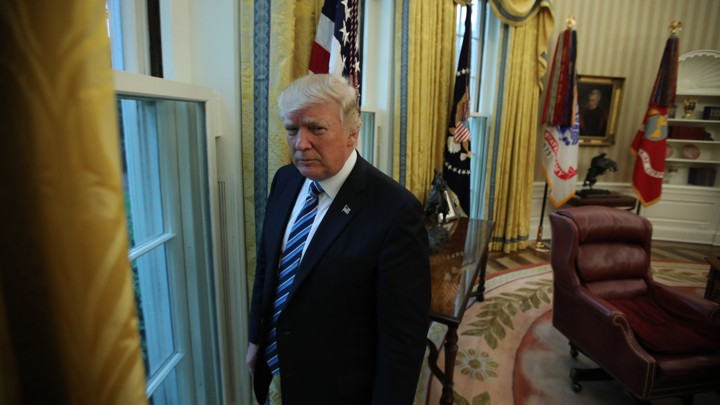
Trump insists hush money payments by Cohen were legal - BBC News

August 23, 2018.

Trump insists hush money payments by Cohen were legal

Trump voter: "Everybody lies"
US President Donald Trump has insisted that payments to two women who say he had affairs with them did not break election campaign rules.

It comes after his ex-lawyer, Michael Cohen, pleaded guilty to violating laws during the 2016 presidential election over his handling of the hush money.

Interviewed by Fox & Friends, Mr Trump said the payments had come from him personally, not from the campaign.

He has in the past denied knowing about one of the payments altogether.

'I don't care if Trump paid off a porn star'
Mr Trump also accused Cohen of making up stories to receive a lighter sentence.

What did Trump say exactly?
In an excerpt from the Fox & Friends interview, which will be aired in full on Thursday, Mr Trump responded to questions about the hush payments by insisting that they were "not a campaign violation".

"They came from me," he said. "And I tweeted about it. But they did not come out of the campaign."

He added that he had only found out about the payments "later on".

His comments contradict a statement made earlier by Cohen under oath in which he said the president had instructed him to make the payments.

Was Trump's Stormy Daniels payment legal?
In July, Cohen released audio tapes of him and Mr Trump allegedly discussing one of the payments before the election.

So did the payments break campaign rules?
Cohen, who was Mr Trump's personal lawyer for more than a decade, admitted passing on funds to two women thought to be porn star Stormy Daniels and former Playboy model Karen McDougal.

The hush money payments were not reported to the Federal Election Commission during the campaign.

The question is whether the payments were made to protect Mr Trump's personal reputation or to protect his image as a presidential candidate.

Under US election rules, any payments made with the aim of influencing a vote must be reported.

For more on this story:
Why Trump's opponents are holding off on impeachment
Trumpland's crazy Tuesday, blow by blow
Trump's chances of weathering the storm
Cohen acknowledged in court that the aim was indeed to protect Mr Trump's candidacy, saying he had paid the money "at the direction" of Mr Trump "for the principal purpose of influencing the election".

If Mr Trump were to be prosecuted over the money - not through the normal courts, because he is the sitting president, but conceivably in Congress, through an impeachment process - investigators would have to prove that he had indeed given the money to Cohen for electoral reasons.

How has Trump contradicted himself?
In his first public comments, back in April, about his alleged affair with Stormy Daniels, Mr Trump denied knowing about the $130,000 (£100,000) payment made to the actress via Cohen.

Ms Daniels, whose real name is Stephanie Clifford, alleges that she and Mr Trump had sex in a hotel room in 2006.

Asked by a reporter in the press cabin of Air Force One if he had any knowledge about where Cohen had got the money to pay Ms Daniels, the president responded at the time: "I don't know."

The following month, Mr Trump officially disclosed a payment to Cohen of between $100,001 and $250,000 for expenses incurred in 2016.

What happens next?
Any action against Mr Trump is unlikely until after the mid-term elections on 6 November, when the opposition Democrats will seek to break the grip of Mr Trump's Republican Party on Congress.

In the meantime, Cohen may agree to testify to the inquiry into alleged collusion between the Trump campaign and Russia.

There is no confirmation that Cohen will speak to Robert Mueller's inquiry but his personal lawyer has said his client is happy to talk.

Manafort Juror: One ‘Holdout’ Kept Him From Being Convicted on All Counts - Daily Intelligencer ( New York Magazine )

August 23, 2018.

Manafort Juror: One ‘Holdout’ Kept Him From Being Convicted on All Counts
By Margaret Hartmann@MargHartmann

Late on Wednesday night, Fox News aired a lengthy interview with Paula Duncan, the first juror in Paul Manafort’s trial to go public. Duncan, 52, identified herself as a strong support of President Trump, saying she kept a Make America Great Again hat in the backseat of her car as she drove to the trial, and plans to vote for Trump again in 2020. However, Duncan said she became convinced that Manafort was guilty on all 18 counts of bank and tax fraud, and almost the entire jury agreed; she revealed that the jury deadlocked on ten of the counts due to a single juror.

“We all tried to convince her to look at the paper trail,” Duncan said. “We laid it out in front of her again and again and she still said that she had a reasonable doubt. And that’s the way the jury worked. We didn’t want it to be hung, so we tried for an extended period of time to convince her, but in the end she held out and that’s why we have ten counts that did not get a verdict.”

Duncan initially said she felt the case was “politicized” because “in the evidence there were references to Trump and his son-in-law and to the Trump campaign.” She also referred to Special Counsel Robert Mueller’s investigation as the “witch hunt to try to find Russian collusion,” borrowing Trump’s phrasing, and noted that Manafort wouldn’t have been caught if not for his ties to the president. “Something that went through my mind is, this should have been a tax audit,” Duncan said.

However, she said she felt all of the jurors tried to consider the evidence fairly, regardless of their political leanings, and “crazily enough, there were even tears” during deliberations.

Earlier on Wednesday, unsealed transcripts in the case revealed that there were tensions on the jury, and the defense requested a mistrial several times. About two weeks ago, a female juror reported that another juror had commented “the defense was weak,” though they were barred from discussing the case before deliberations. Judge T.S. Ellis III interviewed all of the jurors, and everyone except the women who initially complained said they were following all of his instructions.

Duncan said it was difficult not to discuss the case with other jurors while they waited around for the proceedings to get underway, but they followed the rules and did their civil duty. While the judge kept the jurors’ names under seal to protect them, Duncan said she does not feel threatened and wanted to shed light on the case.

“I thought that the public, America, needed to know how close this was, and that the evidence was overwhelming,” Duncan said. “I did not want Paul Manafort to be guilty, but he was, and no one’s above the law.”